
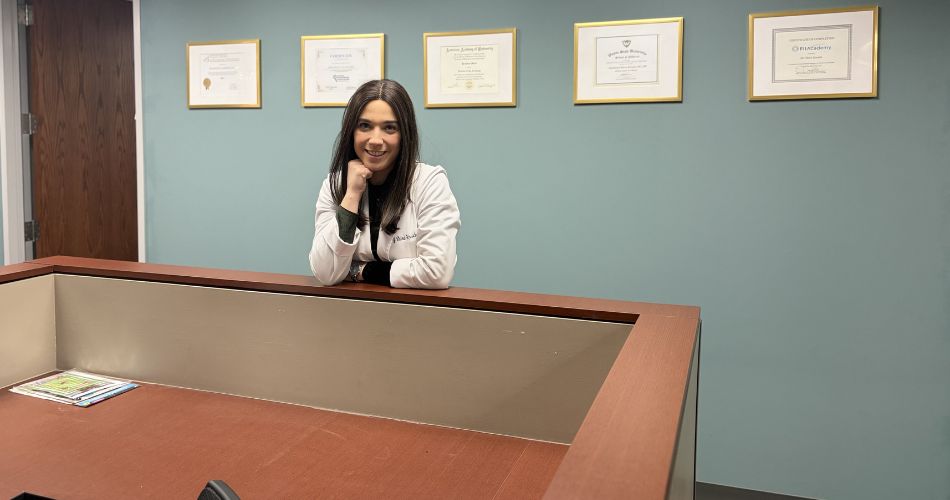
 Medically reviewed by Dr. Y. Shira Kresch, OD MSLast reviewed: May 26, 2026
For patients with severe ocular surface disease, scleral lenses do something no eye drop, in-office treatment, or other contact lens can do: they create a continuous reservoir of saline solution that bathes the cornea throughout the day. The result is often dramatic relief for patients who have been struggling with chronic dry eye for years.
What Are Scleral Lenses?
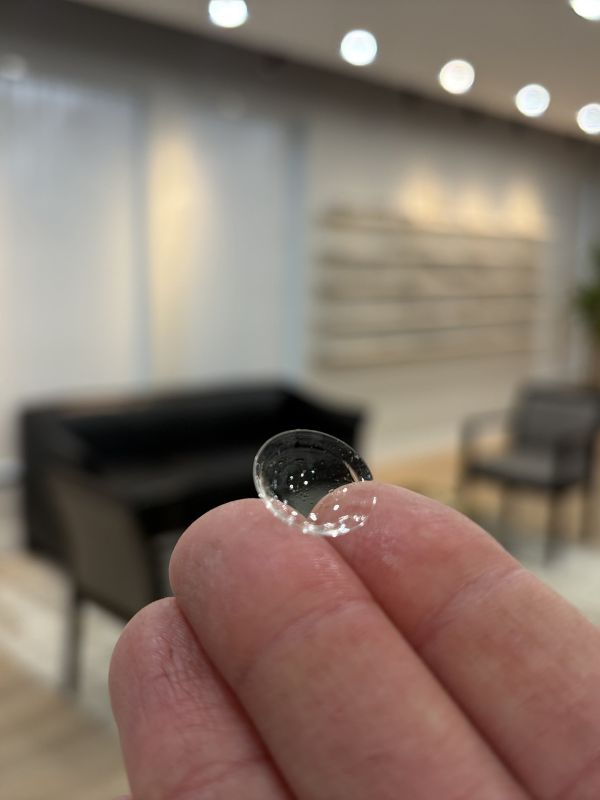
Scleral lenses are rigid, gas-permeable contact lenses with a diameter typically between 15mm and 22mm — significantly larger than standard contact lenses (around 9–10mm) or even traditional rigid lenses (around 10mm). Their size allows them to vault completely over the cornea without touching it, resting instead on the white of the eye (the sclera).
Before insertion, the lens is filled with a sterile saline solution. Once placed on the eye, that solution remains trapped between the back of the lens and the corneal surface — creating a continuous, oxygen-permeable fluid environment that protects the cornea and provides constant moisture.
Why Scleral Lenses Work for Severe Dry Eye
Scleral lenses help severe dry eye through several mechanisms simultaneously:
- Continuous corneal hydration. The saline reservoir keeps the corneal surface in constant contact with moisture, all day long. This is something no eye drop can match.
- Mechanical protection. The lens shields the cornea from environmental exposure, wind, friction from blinking, and surface irritation.
- Vision clarity. By creating a smooth optical surface over an irregular cornea, scleral lenses provide visual clarity that is often impossible with glasses or standard contact lenses.
- Healing environment. The constant moisture and protection allow damaged corneal tissue to heal and stabilize over time.
Who Benefits Most from Scleral Lenses?
Scleral lenses are most effective for patients with:
- Severe chronic dry eye that has not responded to other treatments
- Sjögren syndrome and other autoimmune-related dry eye
- Graft-versus-host disease affecting the eyes
- Stevens-Johnson syndrome
- Post-LASIK ectasia or severe post-surgical dry eye
- Keratoconus and other corneal irregularities
- Corneal scarring or post-transplant corneas
- Neurotrophic keratitis
- Severe ocular surface disease where other contact lenses are intolerable
Scleral lenses are also an excellent option for patients with moderate dry eye who want continuous, all-day comfort that artificial tears and standard treatments cannot provide.
The Scleral Lens Fitting Process
Scleral lens fitting is significantly more complex than fitting standard contacts. The lens must be custom-designed to match the unique topography of each eye. At our practice, the process involves several visits:
Initial Evaluation
The process starts with a comprehensive dry eye evaluation to confirm that scleral lenses are appropriate for your case and to address any underlying conditions like MGD or Demodex blepharitis first.
Corneal Topography and Scleral Mapping
Detailed imaging maps the precise shape of your cornea and scleral surface. This data drives the custom lens design.
Lens Design and Trial Fitting
A custom diagnostic lens is selected based on your measurements. We assess the fit, comfort, and vision quality. Adjustments are made and the lens is refined to your specific anatomy.
Lens Dispensing and Training
Once the final lens design is confirmed, you receive training on how to insert, remove, clean, and care for your lenses. Most patients become comfortable with the process within a few weeks of practice.
Follow-Up VisitsFollow-up appointments over the first few months ensure the lenses are performing well and that your eyes are healthy. Adjustments to the lens design can be made if needed.What to Expect Once You Have Scleral Lenses
Most patients can wear scleral lenses comfortably for 12–16 hours per day. The lenses are removed at night and cleaned thoroughly. With proper care, a set of scleral lenses can last 1–2 years before replacement.
Patients who have struggled with severe dry eye often describe their first day with scleral lenses as transformative — finally being able to read, drive, work on a computer, or simply exist without the constant gritty, burning sensation they have lived with for years.
Related Resources
Scleral lenses are often the right answer for severe Evaporative Dry Eye and aqueous-deficient dry eye that has not responded to standard care. For patients with moderate disease who can still benefit from in-office treatments, see our Combined Dry Eye Treatment Protocol page.
At the 1-800-Dry-Eyes Specialty Vision Institute we diagnose and treat the dry eye disease driving your symptoms. When the ocular surface needs a specialty lens to stay protected, our affiliated practice Michigan Contact Lens fits scleral lenses for the most demanding cases — including dry eye from Sjögren’s syndrome and graft-versus-host disease. Dr. Kresch treats patients at both practices, so your dry eye management and lens fitting stay coordinated under one doctor.
Frequently Asked Questions About Scleral Lenses
Are scleral lenses comfortable?
Yes — often more comfortable than standard contact lenses. Because they rest on the relatively insensitive sclera rather than touching the cornea, many patients report that scleral lenses feel like nothing once they are in.
How long does it take to learn to insert them?
Most patients are competent with insertion and removal within 2–3 weeks of practice. We provide hands-on training and ongoing support throughout the learning period.
Can I sleep in scleral lenses?
No. Scleral lenses are designed for daily wear and must be removed at night for cleaning and corneal oxygen exchange.
How long do scleral lenses last?
With proper care, a set of scleral lenses typically lasts 1–2 years before replacement is recommended.
Does insurance cover scleral lenses?
Coverage varies significantly by insurance plan. Medical insurance (not vision insurance) sometimes covers scleral lenses when prescribed for a documented medical condition like severe dry eye, keratoconus, or post-surgical complications. We help with insurance verification and coding.
Can I still wear glasses with scleral lenses?
Most patients do not need glasses while wearing their scleral lenses, since the lenses provide both refractive correction and surface protection. Reading glasses may still be needed for near vision, depending on your prescription.
Will scleral lenses cure my dry eye?
Scleral lenses do not cure dry eye, but they often provide such substantial symptom relief and corneal protection that patients describe their daily experience as completely transformed. They work best as part of a comprehensive dry eye treatment approach.
Are scleral lenses safe?
Yes, when properly fitted and cared for. Scleral lenses have been used safely for decades for severe ocular surface disease. The key is proper fitting (by a doctor with scleral expertise), proper hygiene, and regular follow-up.