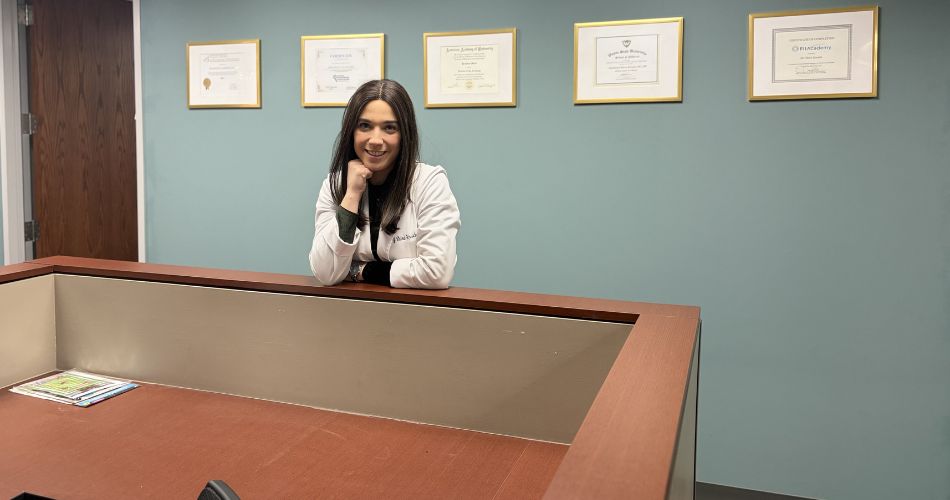
 Medically reviewed by Dr. Y. Shira Kresch, OD MS · Last reviewed: May 26, 2026
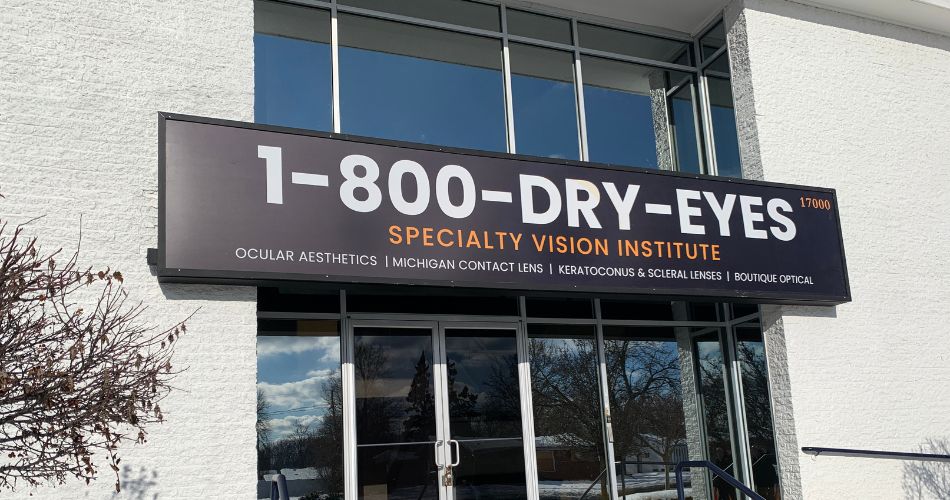
From downtown Birmingham (Old Woodward and Maple), head south on Old Woodward, which becomes Woodward Avenue. Continue south for about 4 miles, then turn right onto West 10 Mile Road. Our office is on the south side of 10 Mile Road in the Specialty Vision Institute building at 17000 W 10 Mile Rd, Suite 151, between Southfield Rd and Greenfield Rd.
An alternate route via Southfield Road: head south on Southfield Rd from the Birmingham/Beverly Hills border, continue past 14 Mile, 12 Mile, and turn right onto 10 Mile Road. Office on the right.
Drive time: approximately 9 minutes (6 miles) outside rush hour. Free parking on-site.
Why Birmingham Patients Come to a Dry Eye Specialist
Birmingham’s demographic profile — an older, professional, generally affluent population concentrated near the downtown walkable district — overlaps closely with the populations that benefit most from specialty dry eye evaluation. Two patterns we see often from this area:
Post-cataract and post-LASIK dry eye. Both surgeries are common in Birmingham’s 55+ demographic and both meaningfully accelerate meibomian gland dysfunction in patients who already had borderline tear film stability. Many Birmingham patients arrive thinking their post-surgical dryness is “normal recovery” when it’s actually a treatable underlying condition.
Screen-driven evaporative dry eye in working professionals. Birmingham’s downtown professional cluster — law firms, financial services, design studios — is a screen-heavy work environment. Long focal hours reduce blink rate by an order of magnitude and contribute to evaporative dry eye that artificial tears alone won’t resolve. IPL and LLLT address the underlying meibomian gland obstruction that drives this pattern.
The shared thread: drops manage symptoms; they don’t treat causes. A comprehensive evaluation is the only way to tell which mechanism is actually driving your symptoms — and which treatments are likely to give you durable relief instead of indefinite drops.
For Birmingham-area patients who also need keratoconus management or specialty contact lens fitting — scleral, hybrid, or Rose K lenses — our affiliated practice Michigan Contact Lens is the corneal specialty destination. Many of our dry eye patients also see Dr. Kresch there for the specialty contact lens side of their care — the same doctor across both practices.
Treatments Available at Our Southfield Office
Frequently Asked Questions
Common questions from Birmingham, MI patients about getting dry eye care at 1-800-Dry-Eyes.
How far is 1-800-Dry-Eyes from Birmingham, MI?
Our Southfield office is about a 10-minute drive from downtown Birmingham — straight west on Maple Road or south on Telegraph. Most of our Birmingham patients come during a workday and are back home well within the hour.
Do you accept patients from Birmingham?
Yes — Birmingham is one of the closest cities to our practice, and we see Birmingham patients regularly. There is no dedicated dry eye specialty clinic in Birmingham itself, so patients who want diagnostic-grade testing and in-office treatment (IPL, RF, LLLT, scleral lenses) come to us.
What does a first visit look like for a Birmingham patient?
Your initial consultation runs 60–90 minutes and includes a full diagnostic workup — Keratograph imaging, OCT, meibography, and structured tear film testing. You leave with a clear diagnosis and a treatment plan, not just a prescription for drops. Plan to spend about half a day from door to door.
Does my insurance cover the consultation?
The diagnostic portion of your evaluation is typically billed to your medical insurance (not your vision plan) — we are in-network with most major Michigan carriers including BCBS, Aetna, Cigna, and United. In-office treatments like IPL and RF are usually considered elective; CareCredit is available for those.
How quickly can I be seen?
Initial consultations are typically available within 1–3 weeks. Birmingham patients often book the visit alongside an existing routine in the Southfield/Royal Oak area. Call 1-800-DRY-EYES for the earliest slot.
Ready to talk to a Birmingham-area dry eye specialist?
9 minutes south of downtown Birmingham. Free parking. Most patients start with a comprehensive evaluation to identify what's actually driving their symptoms.