 Medically reviewed by Dr. Y. Shira Kresch, OD MS · Last reviewed: May 26, 2026
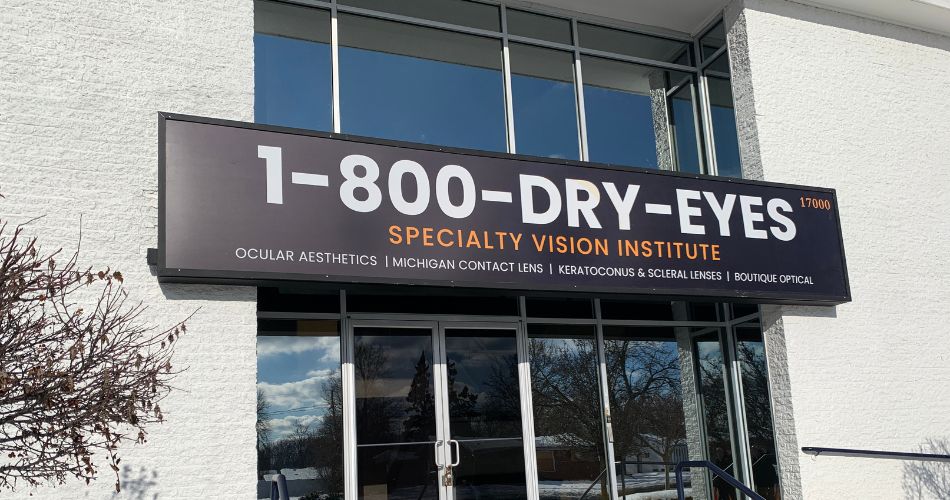
From the West Bloomfield Township Library (4600 Walnut Lake Rd), head east on Walnut Lake Road. Continue east for about 4 miles, then turn right (south) onto Orchard Lake Road. Continue south past Maple Road, then turn left (east) onto 14 Mile Road. Continue east to Lahser Road, turn right (south) onto Lahser, then left (east) onto 10 Mile Road. Our office is on the south side at 17000 W 10 Mile Rd, Suite 151.
Alternate route via I-696: head south on Orchard Lake to I-696 east, exit at Telegraph Rd south, then east on 10 Mile.
Drive time: approximately 15 minutes outside rush hour. Free parking on-site.
Why West Bloomfield Patients Come to a Dry Eye Specialist
West Bloomfield’s demographic skews older, affluent, and health-literate — a population that tends to be diagnosed earlier with the systemic conditions that drive severe and treatment-resistant dry eye. We see three patterns from West Bloomfield consistently:
Autoimmune-related dry eye. Sjögren’s syndrome, lupus, rheumatoid arthritis, and thyroid eye disease all produce dry eye as a downstream consequence, and West Bloomfield patients tend to have access to rheumatology and endocrinology referrals that catch these conditions early. The dry eye component, however, often progresses past what artificial tears can manage. Scleral lenses are the gold-standard intervention for severe aqueous-deficient dry eye — they create a saline reservoir over the cornea, protecting the ocular surface and providing all-day comfort that no eye drop can match.
Post-cataract surgery dry eye in patients over 60. Many West Bloomfield patients had cataract surgery in their mid-50s to 70s and discovered that the post-surgical dryness never fully resolved. Cataract surgery accelerates meibomian gland dysfunction in patients who already had borderline tear film stability — and IPL and RF address the underlying gland obstruction that drops can’t reach.
Chronic blepharitis and ocular rosacea. Inflammatory eyelid conditions are common in West Bloomfield’s demographic and are often misdiagnosed as “just dry eye” for years. Demodex blepharitis alone affects an estimated 25 million Americans, and addressing it requires more than lid wipes — it requires targeted treatment of the mite population, gland inflammation, and tear film recovery as a system.
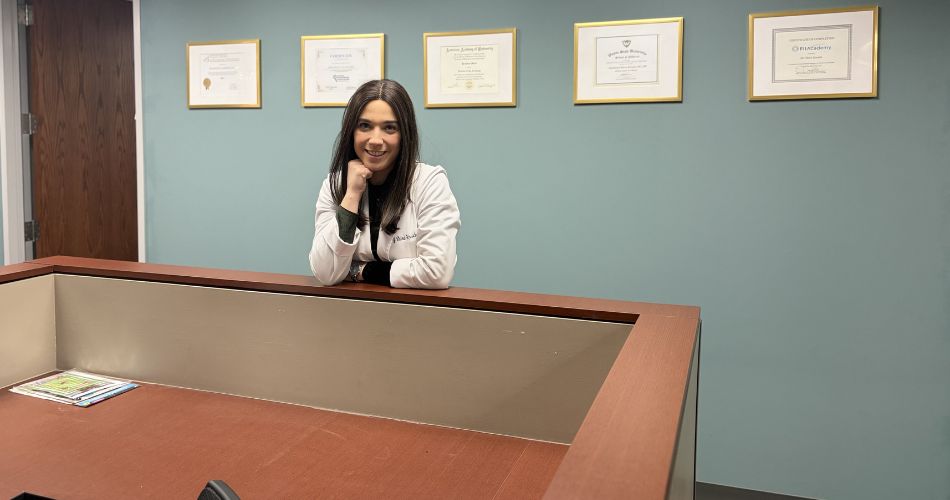
For West Bloomfield-area patients who also need keratoconus management or specialty contact lens fitting — scleral, hybrid, or Rose K lenses — our affiliated practice Michigan Contact Lens is the corneal specialty destination. Many of our dry eye patients also see Dr. Kresch there for the specialty contact lens side of their care — the same doctor across both practices.
Treatments Available at Our Southfield Office
Frequently Asked Questions
Common questions from West Bloomfield, MI patients about visiting 1-800-Dry-Eyes.
How far is 1-800-Dry-Eyes from West Bloomfield, MI?
About 15 minutes south of West Bloomfield Township, taking Orchard Lake Road down to the Southfield area. Reachable from the Lower Long Lake / Walnut Lake neighborhoods, the West Bloomfield Township office, and the Henry Ford West Bloomfield Hospital corridor.
Do you take patients from West Bloomfield?
Yes — West Bloomfield is one of the communities we see most often. There is no dedicated dry eye specialty clinic in West Bloomfield itself, so patients who want diagnostic-level testing and in-office treatment come to us.
I have tried Restasis or Xiidra without success. Can you actually help?
Likely yes. Prescription drops work for one specific mechanism — and not for others. When drops have not helped, it usually means the dry eye is being driven by something else (meibomian gland dysfunction, inflammation, demodex blepharitis, or a systemic condition). Our evaluation identifies what is actually causing your symptoms and which treatments will address it.
How long does a typical visit take?
Initial consultation is 60–90 minutes — this is a thorough diagnostic workup, not a quick visit. Plan accordingly. Follow-up treatment visits are usually shorter, in the 30–60 minute range depending on the procedure.
What about insurance and cost?
The diagnostic evaluation is generally billed to medical insurance (not vision insurance), and we are in-network with most major Michigan plans. In-office treatments like IPL and RF are typically not insurance-covered. We accept CareCredit and discuss cost transparently before scheduling any treatment.
Ready to talk to a West Bloomfield-area dry eye specialist?
15 minutes east. Free parking. Most patients start with a comprehensive evaluation to identify what's actually driving their symptoms.