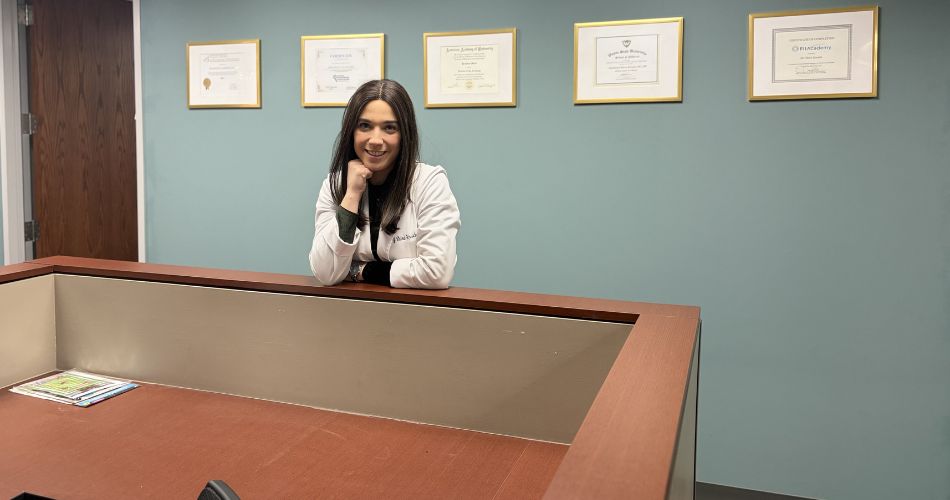
 Medically reviewed by Dr. Y. Shira Kresch, OD MS · Last reviewed: May 26, 2026
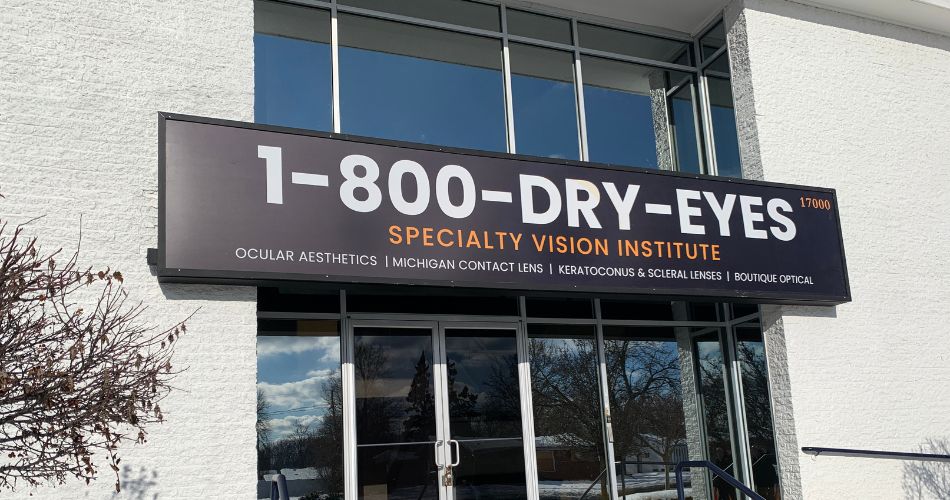
From downtown Royal Oak (S Main St area), head west on 11 Mile Road. Continue west for about 4 miles through Berkley and into Southfield. Turn left (south) onto Southfield Road, then right onto West 10 Mile Road. Our office is on the south side of 10 Mile at 17000 W 10 Mile Rd, Suite 151.
Alternate route via I-696: take the Lodge Freeway (M-10) or I-696 westbound, exit at Southfield Rd, head south to 10 Mile, then turn right.
Drive time: approximately 13 minutes outside rush hour. Free parking on-site.
Why Royal Oak Patients Come to a Dry Eye Specialist
Royal Oak’s demographic is younger and more urban than the surrounding affluent suburbs — and that demographic comes with its own distinct dry eye pattern. The most common pattern we see from Royal Oak patients is:
Screen-driven evaporative dry eye in working professionals. When you’re focused on a screen — laptop, second monitor, phone — your blink rate drops from a normal 15–20 blinks per minute to as low as 3–4. Incomplete blinks mean the meibomian glands at your eyelid margin never get the mechanical pressure they need to release oil, so the tear film evaporates faster than your eyes can replenish it. After enough years of this pattern, the glands begin to atrophy structurally. That’s meibomian gland dysfunction, and it’s the most common cause of chronic dry eye in working-age adults.
Why drops don’t fix it. Artificial tears top up the watery layer of your tear film for about 15 minutes. They don’t fix gland obstruction, they don’t address inflammation, and they don’t bring blink rate back up. IPL therapy targets the underlying inflammation and bacterial drivers, RF thermally restores meibomian gland flow, and LLLT stimulates gland recovery — addressing the actual disease, not just the symptoms.
Contact lens discomfort. Royal Oak has a high concentration of contact lens wearers, and contact lens-related dry eye is one of the most common reasons people quit lenses. If you’re considering giving up on contacts because they’re uncomfortable by mid-afternoon, a comprehensive dry eye evaluation is the right first step before switching modalities or giving up entirely.
For Royal Oak-area patients who also need keratoconus management or specialty contact lens fitting — scleral, hybrid, or Rose K lenses — our affiliated practice Michigan Contact Lens is the corneal specialty destination. Many of our dry eye patients also see Dr. Kresch there for the specialty contact lens side of their care — the same doctor across both practices.
Treatments Available at Our Southfield Office
Frequently Asked Questions
Common questions from Royal Oak, MI patients about getting dry eye care at 1-800-Dry-Eyes.
How far is your office from Royal Oak, MI?
About 15 minutes from downtown Royal Oak — north on Coolidge or up Woodward and west on 10 Mile. The trip is straightforward and very reachable for patients who work in the downtown Royal Oak area or live near the Detroit Zoo and Beaumont.
Are you taking new patients from Royal Oak?
Yes. We see new Royal Oak patients regularly. Many come to us after their general optometrist has tried drops and warm compresses without lasting relief, or after they have been diagnosed at Beaumont but want a dedicated dry eye specialty workup.
I have already been told I have dry eye. What is different about your evaluation?
A general dry eye diagnosis tells you almost nothing — there are at least six different mechanisms behind dry eye, and the right treatment depends entirely on which one is driving your case. We use imaging (Keratograph, OCT, meibography) to identify the specific cause, then build a treatment plan around that.
How long does the appointment take?
Initial consultation is 60–90 minutes. We recommend booking it for a time when you can take it slow — this is a thorough workup, not a 15-minute check.
What do treatments cost, and what does insurance cover?
The diagnostic evaluation is typically billed to your medical insurance. In-office treatments like IPL ($350-450/session), RF, and LLLT are not covered by insurance but financing through CareCredit is available. Cost is discussed transparently before any treatment is scheduled.
Ready to talk to a Royal Oak-area dry eye specialist?
13 minutes west on 11 Mile. Free parking. Most patients start with a comprehensive evaluation to identify what's actually driving their symptoms.