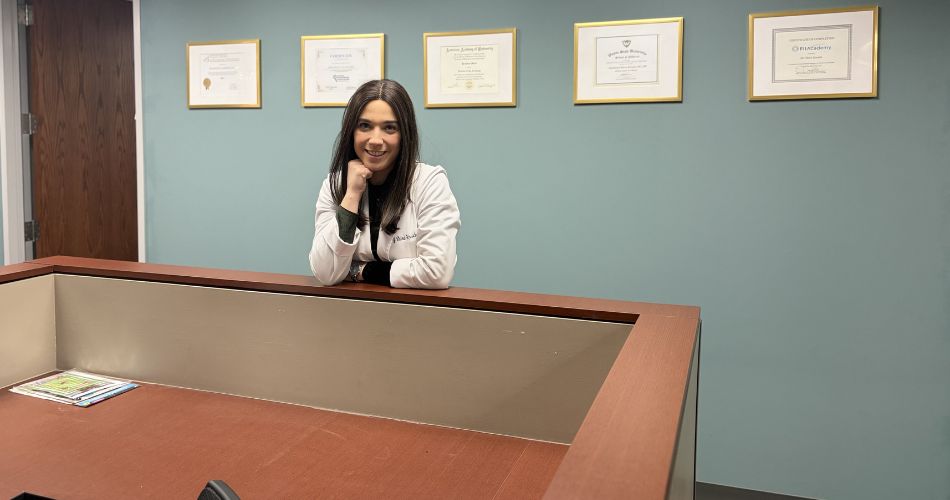
 Medically reviewed by Dr. Y. Shira Kresch, OD MS · Last reviewed: May 26, 2026
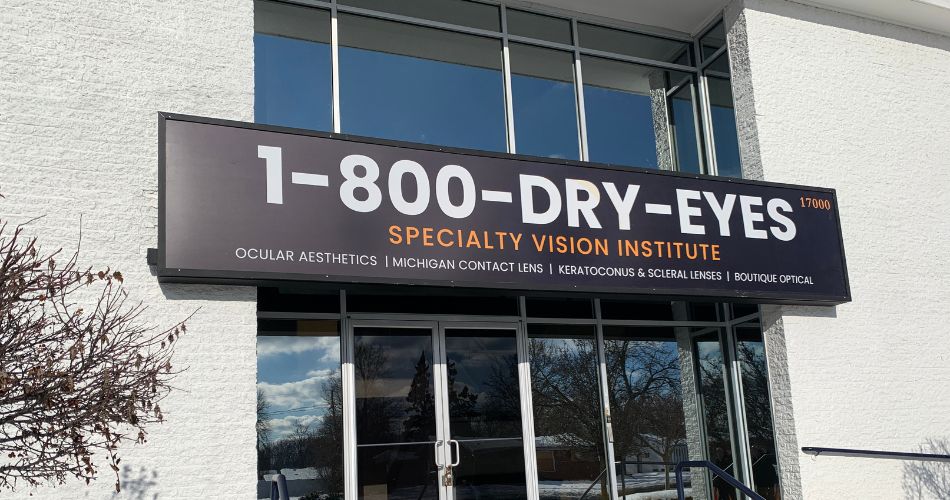
From Farmington Hills City Hall (31555 W 11 Mile Rd), head east on 11 Mile Road. Continue east for about 5 miles through Farmington and into Southfield, passing Inkster Road and Telegraph Road. Turn right (south) onto Southfield Road, then right (west) onto West 10 Mile Road. Our office is on the south side at 17000 W 10 Mile Rd, Suite 151.
Alternate route via I-696: take I-696 east, exit at Telegraph Rd south, then east on 10 Mile.
Drive time: approximately 9–12 minutes outside rush hour. Free parking on-site.
Why Farmington Hills Patients Come to a Dry Eye Specialist
Farmington Hills is one of our closest neighboring communities — most patients reach our office in under 12 minutes. Because it’s such a large, demographically mixed suburb, we see the full spectrum of dry eye presentations from Farmington Hills patients:
Chronic dry eye that hasn’t responded to standard care. Many patients arrive after years of artificial tears, prescription drops, warm compresses, and lid scrubs — sometimes after multiple optometry visits — without lasting relief. The most common reason: the underlying disease (usually meibomian gland dysfunction, sometimes complicated by Demodex blepharitis or ocular rosacea) was never actually diagnosed, only the symptoms managed. A comprehensive dry eye evaluation identifies what’s actually driving the symptoms before any treatment decisions are made.
Post-LASIK and post-cataract dry eye. Refractive and cataract surgeries are common in Farmington Hills’ middle-aged and older demographic, and both can accelerate or unmask underlying dry eye that wasn’t a problem before. IPL and RF address the gland-level changes that drops can’t reach.
Severe and treatment-resistant cases. For patients whose dry eye has not responded to standard interventions — including those with autoimmune conditions, severe corneal staining, or significant ocular surface compromise — scleral lenses create a saline reservoir over the cornea that provides protection and all-day comfort no eye drop can match. This is a specialty fitting subspecialty, not a routine optometry service, and it’s one of the most common reasons patients drive in from Farmington Hills.
For Farmington Hills-area patients who also need keratoconus management or specialty contact lens fitting — scleral, hybrid, or Rose K lenses — our affiliated practice Michigan Contact Lens is the corneal specialty destination. Many of our dry eye patients also see Dr. Kresch there for the specialty contact lens side of their care — the same doctor across both practices.
Treatments Available at Our Southfield Office
Frequently Asked Questions
Common questions from Farmington Hills, MI patients about getting dry eye care at 1-800-Dry-Eyes.
How close is your office to Farmington Hills?
About 10 minutes east of Farmington Hills — straight across 10 Mile Road or 11 Mile Road. We are one of the easiest specialty offices to reach from the Farmington Hills Civic Center, downtown Farmington, and the Heritage Park area.
Do you accept patients from Farmington Hills?
Yes — Farmington Hills is one of the closest cities to our practice and many of our patients live there. There is no dry eye specialty clinic in Farmington Hills itself; the closest one is ours.
What makes your evaluation different from what my regular eye doctor does?
General optometrists are excellent at routine eye care, but most are not equipped to diagnose the specific cause of dry eye. We use diagnostic imaging — Keratograph topographer, OCT, meibography — to identify which mechanism is driving your symptoms. Without that workup, treatment is essentially trial and error with drops.
How soon can I be seen?
Most new patients are seen within 1–3 weeks. Because Farmington Hills is so close, we are often able to offer same-week appointments for patients with significant symptoms. Call 1-800-DRY-EYES to find the earliest slot.
What does the cost look like?
The diagnostic consultation is typically billed to your medical insurance and covered by most major Michigan plans. In-office treatments — IPL, RF, LLLT — are usually elective and not covered, but we offer CareCredit financing and discuss exact pricing transparently before any treatment is scheduled.
Ready to talk to a Farmington Hills-area dry eye specialist?
9 minutes east on 11 Mile. Free parking. Most patients start with a comprehensive evaluation to identify what's actually driving their symptoms.