Dry eye disease (DED) — also called dry eye syndrome, keratoconjunctivitis sicca, or ocular surface disease — is a chronic, progressive condition in which the tear film that protects and lubricates the front surface of your eye becomes unstable or deficient. The result is an eye surface that is constantly exposed, inflamed, and irritated.
Dry eye is one of the most common reasons people visit an eye care provider, affecting an estimated 16 million diagnosed Americans — and likely millions more who haven’t been formally diagnosed. It’s more than a minor inconvenience. Left untreated, dry eye disease causes cumulative damage to the ocular surface, progressively worsens over time, and can significantly impact your vision, comfort, and quality of life.
Despite how common it is, dry eye is widely misunderstood — by patients and even by many general eye care providers. Most people think it just means “my eyes feel dry” and reach for artificial tears. But dry eye disease is a multifactorial condition involving inflammation, gland dysfunction, nerve damage, and tear film instability. Understanding what dry eye actually is — and what type you have — is the first step toward finding a treatment that works.
Your tear film isn’t just water. It’s a highly structured, three-layer coating that covers the entire front surface of your eye and performs several critical functions: it lubricates the eye with every blink, provides a smooth optical surface for clear vision, delivers oxygen and nutrients to the cornea, flushes away debris and pathogens, and protects against infection. When any component of this system breaks down, dry eye disease is the result.

The outermost layer is a thin film of oil produced by the Meibomian glands in your upper and lower eyelids. Its job is to seal the tear film and slow evaporation. When the Meibomian glands become blocked or dysfunctional, this oil layer deteriorates and your tears evaporate far too quickly — the defining mechanism of evaporative dry eye, which accounts for up to 86% of all dry eye cases.
The middle and thickest layer is produced by the lacrimal glands located above each eye. This layer provides the bulk of the tear volume and contains water, electrolytes, proteins, and antimicrobial enzymes. When the lacrimal glands don't produce enough of this layer — due to aging, autoimmune conditions, medications, or nerve damage — the result is aqueous deficient dry eye.
The innermost layer is produced by goblet cells in the conjunctiva (the clear tissue covering the white of the eye). Mucin allows the watery layer to spread evenly across the cornea and adhere to its surface. Without a healthy mucin layer, tears bead up and slide off the eye instead of coating it. Mucin deficiency is often seen in patients with chemical burns, Stevens-Johnson syndrome, chronic inflammation, or radiation-related dry eye.
When you blink, this entire three-layer structure is refreshed and redistributed across the cornea. Between blinks, the tear film must remain stable long enough to protect the eye and maintain clear vision. In healthy eyes, the tear film stays intact for 10+ seconds between blinks. In dry eye patients, it can break down in under 3 seconds — leaving the cornea exposed, inflamed, and vulnerable.
Every case of dry eye has a type, a cause, and a severity — and the treatment should be matched accordingly. If you’ve been told “you just have dry eye” without anyone explaining what type or why, you haven’t had a real dry eye evaluation yet.
At the 1-800-Dry-Eyes Therapy Center in Southfield, MI, Dr. Shira Kresch uses advanced diagnostic technology to identify exactly what’s happening with your tear film, your glands, and your ocular surface — then designs a personalized treatment plan using IPL, Radiofrequency, LLLT, and scleral lenses to treat the disease at its source.
We serve patients from Southfield, Birmingham, Royal Oak, Troy, Farmington Hills, West Bloomfield, Bloomfield Hills, Oak Park, Berkley, Novi, Livonia, Detroit, and communities throughout Metro Detroit.
Schedule Your Dry Eye Evaluation → | Call 1-800-DRY-EYES → | See All Treatments →
Dry eye isn’t one condition — it’s a spectrum. Identifying which type (or combination of types) you have is essential because the treatments are fundamentally different. This is why a comprehensive dry eye evaluation with advanced diagnostics is so important — treating the wrong type means your symptoms won’t improve.
The most common type — accounting for up to 86% of cases.
Evaporative dry eye occurs when the tear film evaporates too quickly due to a deficient or abnormal lipid (oil) layer. The overwhelming majority of evaporative dry eye is caused by Meibomian Gland Dysfunction (MGD) — a condition where the oil-producing glands in your eyelids become clogged, produce thickened or poor-quality oil, or begin to atrophy and die.
Without a stable oil layer sealing the surface, your tears break down in seconds instead of minutes. The cornea becomes exposed, inflammation ramps up, and you experience the burning, stinging, redness, and blurry vision that define dry eye disease.
Other contributors to evaporative dry eye include Demodex blepharitis (microscopic eyelid mites that damage glands and follicles), ocular rosacea (chronic inflammatory condition of the lids and glands), anterior blepharitis (bacterial or seborrheic inflammation of the lid margins), reduced blink rate from excessive screen time, and environmental factors like low humidity, wind, and forced-air heating.
The good news: evaporative dry eye and MGD are exactly what our core in-office treatments — IPL, Radiofrequency, and LLLT — are designed to treat.
→ Learn More About Evaporative Dry Eye → Learn More About MGD
Less common but often more severe.
Aqueous deficient dry eye occurs when the lacrimal glands fail to produce an adequate volume of tears. Without enough of the watery component, the eye simply doesn’t have the raw material to form a functional tear film — regardless of whether the oil and mucin layers are healthy.
The most well-known cause of ADDE is Sjögren’s syndrome, an autoimmune disorder in which the immune system attacks the body’s moisture-producing glands, including both the lacrimal glands (tears) and the salivary glands (saliva). Other causes include aging (lacrimal gland function naturally declines after 50), diabetes, radiation therapy to the head or neck, certain medications (particularly antihistamines, antidepressants, and anticholinergics), and nerve damage from LASIK or other surgeries that disrupts the feedback loop between the cornea and the lacrimal glands.
Aqueous deficient dry eye often requires a multi-layered treatment approach that may include prescription anti-inflammatory drops, in-office treatments to optimize whatever gland function remains, and for severe cases, scleral lenses that create a constant fluid reservoir over the cornea.
→ Learn More About Aqueous Deficient Dry Eye → Learn More About Autoimmune Dry Eye & Sjögren’s
What most moderate-to-severe patients actually have.
In clinical practice, the majority of patients with significant dry eye symptoms have elements of both evaporative and aqueous deficiency. For example, a post-menopausal woman may have reduced tear production (aqueous deficiency from hormonal changes) combined with clogged Meibomian glands (evaporative component from MGD). A diabetic patient might have lacrimal gland insufficiency alongside neuropathic changes that reduce blink quality and worsen evaporative loss.
This is exactly why a thorough diagnostic workup matters. Treating only the evaporative component when there’s also an aqueous deficiency — or vice versa — leaves half the problem unaddressed and the patient still symptomatic.
At the 1-800-Dry-Eyes Therapy Center, Dr. Kresch uses advanced diagnostics to identify every contributing factor, then builds a customized treatment plan that addresses the full picture.
The vicious cycle that makes dry eye progressive.
Inflammation isn’t just a symptom of dry eye — it’s a driver. When the tear film becomes unstable, the exposed ocular surface triggers an inflammatory cascade. Inflammatory mediators damage the corneal and conjunctival cells, which further destabilizes the tear film, which causes more inflammation. This self-perpetuating cycle is why dry eye disease gets worse over time if left untreated, and why simply adding moisture with drops doesn’t break the cycle.
Conditions that bring a heavy inflammatory component include ocular rosacea, Demodex blepharitis, Sjögren’s syndrome, GVHD, and allergic eye disease. IPL therapy is particularly effective at breaking the inflammatory cycle — it targets abnormal blood vessels, reduces inflammatory mediators, and calms the ocular surface at a level that drops alone cannot reach.
When the nerves are the problem.
In neuropathic dry eye, the corneal nerves themselves are damaged or dysfunctional. This creates a disconnect: the nerves can’t properly signal the lacrimal and Meibomian glands to produce tears, and they may also send distorted pain signals — meaning the patient feels severe burning and discomfort even when the eye surface looks relatively healthy on examination. Conversely, some patients with significant corneal nerve damage feel very little discomfort despite having severe surface disease, because the nerves are too damaged to report the problem.
Corneal nerve damage commonly results from LASIK and refractive surgery, diabetes, herpes simplex or herpes zoster (shingles) infections, long-term contact lens wear, and certain neurosurgical procedures. Neuropathic dry eye is one of the most challenging subtypes to treat and often requires a specialist-level approach combining in-office treatments, autologous serum tears, and scleral lenses.
When the lids can’t do their job.
Your eyelids are essential to tear film health — they spread tears across the cornea with every blink and seal the eye during sleep. When the lids can’t close properly or completely, the exposed portions of the eye dry out rapidly. This is called exposure keratopathy, and it can cause severe corneal damage.
Common causes include thyroid eye disease (Graves’ ophthalmopathy, which causes the eyes to protrude), facial nerve palsy (Bell’s palsy), floppy eyelid syndrome, post-surgical lid changes (after blepharoplasty or other eyelid procedures), and nocturnal lagophthalmos (incomplete lid closure during sleep — more common than most people realize). Treatment focuses on protecting the exposed cornea through a combination of lubricants, lid taping, moisture chambers, and in severe cases, scleral lenses that vault over the cornea and create a sealed hydration chamber.
Your eyes produce three different types of tears. Most people think tears are just tears — but your body actually produces three distinct kinds. Basal tears are the constant, thin film that keeps your eyes lubricated every second of every day. Reflex tears are the flood response triggered by irritants like onions, wind, or smoke. And emotional tears are produced when you cry. Dry eye disease primarily affects your basal tears — the ones responsible for keeping your cornea healthy and your vision clear between blinks. Reflex tears (the watery, emergency kind) are actually why many dry eye patients experience the paradox of constantly watery eyes — your body is overcompensating for a broken basal tear film with tears that don’t have the right composition to stick.
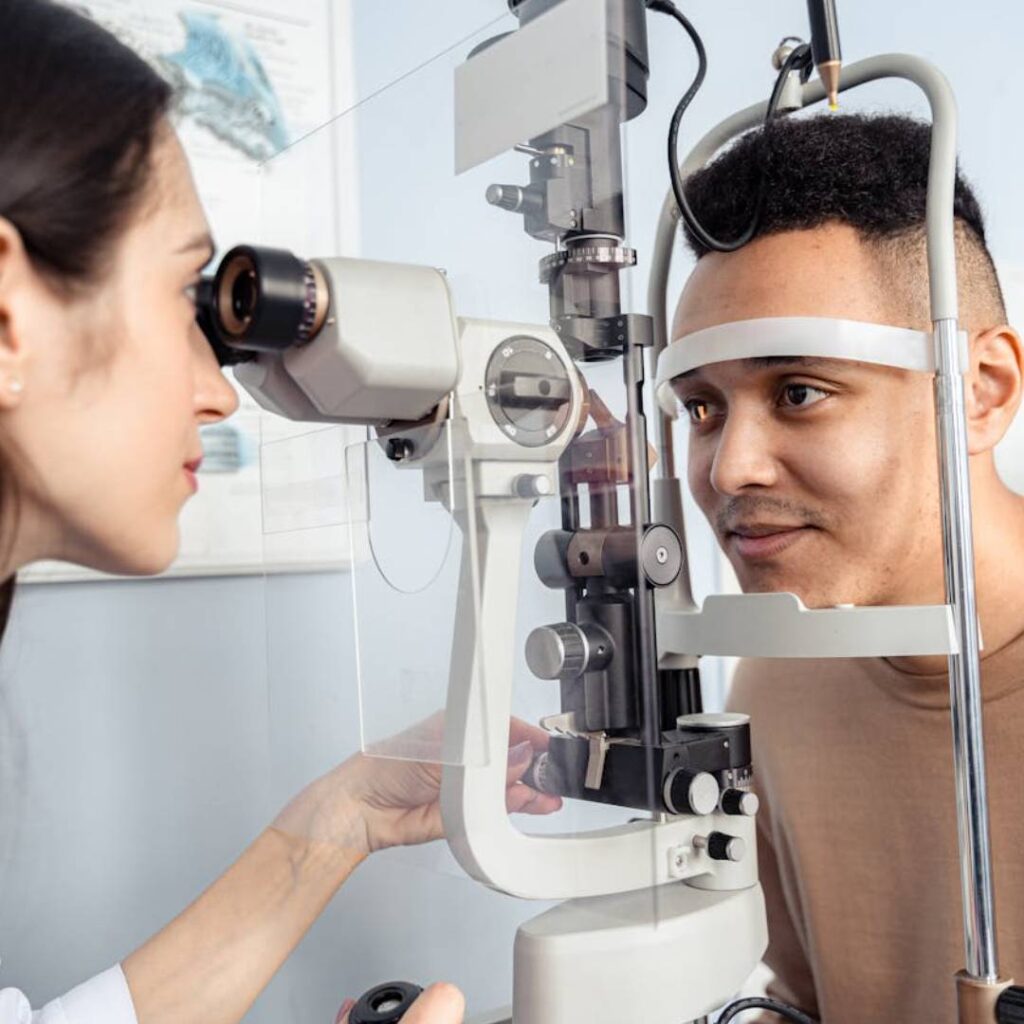
A standard eye exam is not a dry eye exam. Most routine eye exams check your prescription, screen for glaucoma and cataracts, and look at the retina — but they don’t evaluate the tear film, the Meibomian glands, or the ocular surface in the detail required to properly diagnose dry eye disease. That’s why so many patients are told “you have dry eye, use these drops” without anyone identifying which type they have or what’s actually causing it.
At the 1-800-Dry-Eyes Therapy Center, every patient receives a comprehensive dry eye evaluation that includes:
Meibography — Non-invasive infrared imaging that visualizes the structure of your Meibomian glands through the eyelid. This reveals whether glands are healthy, partially blocked, truncated, or completely atrophied — critical information for determining whether MGD is driving your symptoms and how aggressively it needs to be treated.
Tear Breakup Time (TBUT) — Measures how quickly your tear film destabilizes after a blink. A healthy tear film stays intact for 10+ seconds. In dry eye patients, it can break down in under 3 seconds, leaving the cornea exposed to the air.
Tear Osmolarity Testing — Measures the salt concentration of your tears. Elevated osmolarity is a hallmark of dry eye disease and indicates that the tear film is not adequately hydrating the ocular surface. It’s one of the most reliable biomarkers for diagnosing and monitoring dry eye severity.
Ocular Surface Staining — Special dyes (fluorescein and lissamine green) are applied to the eye to reveal areas of corneal and conjunctival damage that are invisible to the naked eye. The pattern and severity of staining tells us exactly where the surface is compromised.
Lid Margin Assessment — Dr. Kresch examines the eyelid margins under magnification to evaluate Meibomian gland orifice health, the quality of expressed meibum (gland secretions), and signs of Demodex, blepharitis, or rosacea.
Patient History & Symptom Assessment — Your medications, systemic health conditions, screen habits, environment, contact lens history, and surgical history all play a role. We take the time to understand the full picture.
This diagnostic data allows Dr. Kresch to classify your dry eye by type, identify every contributing cause, and design a treatment plan that targets the actual disease — not just the symptoms.
Dry eye disease is progressive. It doesn’t plateau on its own. Here’s why:
The inflammatory cycle is self-perpetuating. Tear film instability causes surface damage, which triggers inflammation, which further destabilizes the tear film. Each revolution of this cycle causes a little more damage than the last.
Meibomian glands don’t regenerate. Once a Meibomian gland atrophies and dies from prolonged MGD, it’s gone permanently. The oil production it provided is lost forever. Early treatment can unclog and restore struggling glands, but it cannot resurrect dead ones. This is why early intervention is so important — the glands you save today are the glands that will keep your eyes comfortable for decades.
Corneal nerve damage accumulates. Chronic inflammation and surface dryness progressively damage the dense nerve network in the cornea. As these nerves deteriorate, the feedback loop that drives tear production weakens, making the dry eye even worse.
Compensatory mechanisms fail. In early dry eye, your body compensates — reflex tearing, increased blinking, squinting. Over time, these compensatory mechanisms exhaust themselves, and the symptoms that were once intermittent become constant.
The bottom line: the earlier dry eye disease is properly diagnosed and treated, the better the long-term outcome. If you’ve been managing with drops for months or years and your symptoms are gradually worsening, that’s the disease progressing — and it’s time for a different approach.
→ See All Available Dry Eye Treatments → Learn About IPL Therapy → Learn About Radiofrequency Treatment → Learn About LLLT
Dry eye can affect anyone, but certain groups are at significantly higher risk:
Women — Women are roughly twice as likely to develop dry eye as men, driven by hormonal factors including menopause, pregnancy, and hormonal contraceptives. → Why Dry Eye Affects Women More
Adults over 50 — Tear production and Meibomian gland function naturally decline with age, making dry eye increasingly common after 50 and very prevalent after 65.
Contact lens wearers — Long-term lens use disrupts the tear film, reduces corneal sensitivity, and can accelerate MGD. → Contact Lenses and Dry Eye
Heavy screen users — Blink rate drops by up to 70% during focused screen use, starving the tear film. → Screen Time and Dry Eye
People taking certain medications — Antihistamines, antidepressants, blood pressure drugs, isotretinoin, and many others. → Medications That Cause Dry Eye
Patients with autoimmune conditions — Sjögren’s syndrome, lupus, rheumatoid arthritis, scleroderma, and GVHD.
Post-surgical patients — LASIK, cataract surgery, blepharoplasty, and other eye or eyelid procedures.
People with systemic health conditions — Diabetes, thyroid disease, and vitamin A deficiency.
Michigan residents — Our climate is a factor. Cold, dry winters combined with months of forced-air heating create an environment that’s particularly harsh on the tear film. → Environment and Dry Eye
Dry eye disease is a chronic condition — there is no permanent cure. However, with proper diagnosis and targeted treatment, the vast majority of patients achieve significant, lasting relief. The goal of treatment at our clinic is to restore tear film stability, protect the Meibomian glands, break the inflammatory cycle, and equip you with a long-term maintenance plan to keep symptoms under control.
Yes. Chronic, untreated dry eye can lead to corneal abrasions, scarring, and in severe cases, permanent vision impairment. An unstable tear film also creates a constantly irregular optical surface, causing persistent blurry and fluctuating vision. The earlier you treat the disease, the better you protect your long-term visual health.
Artificial tears add temporary moisture to the surface, but they do nothing to address the underlying cause of the disease — whether that’s clogged Meibomian glands, chronic inflammation, Demodex mites, or lacrimal gland insufficiency. It’s like mopping a floor while the faucet is still running. Treatments like IPL, RF, and LLLT target the actual source of the problem. → Why Eye Drops Don’t Fix Dry Eye
Dry eye and allergies can produce similar symptoms — redness, itching, watering — but the underlying mechanisms are different. Allergies are driven by a histamine response to environmental triggers, while dry eye is driven by tear film instability and ocular surface inflammation. Many patients have both conditions simultaneously, and treating only one while ignoring the other means symptoms won’t fully resolve.
You can’t determine your type from symptoms alone. It requires a comprehensive diagnostic evaluation with Meibography, tear breakup time testing, osmolarity measurement, and surface staining. That’s exactly what we provide at every initial visit.
Yes. While less common, children can develop dry eye — particularly those with excessive screen time, contact lens wear, allergies, or underlying health conditions. If your child complains of burning, itching, or frequent eye rubbing, a dry eye evaluation is worth considering.
Every case of dry eye has a type, a cause, and a severity — and the treatment should be matched accordingly. If you’ve been told “you just have dry eye” without anyone explaining what type or why, you haven’t had a real dry eye evaluation yet.
At the 1-800-Dry-Eyes Therapy Center in Southfield, MI, Dr. Shira Kresch uses advanced diagnostic technology to identify exactly what’s happening with your tear film, your glands, and your ocular surface — then designs a personalized treatment plan using IPL, Radiofrequency, LLLT, and scleral lenses to treat the disease at its source.
We serve patients from Southfield, Birmingham, Royal Oak, Troy, Farmington Hills, West Bloomfield, Bloomfield Hills, Oak Park, Berkley, Novi, Livonia, Detroit, and communities throughout Metro Detroit.