
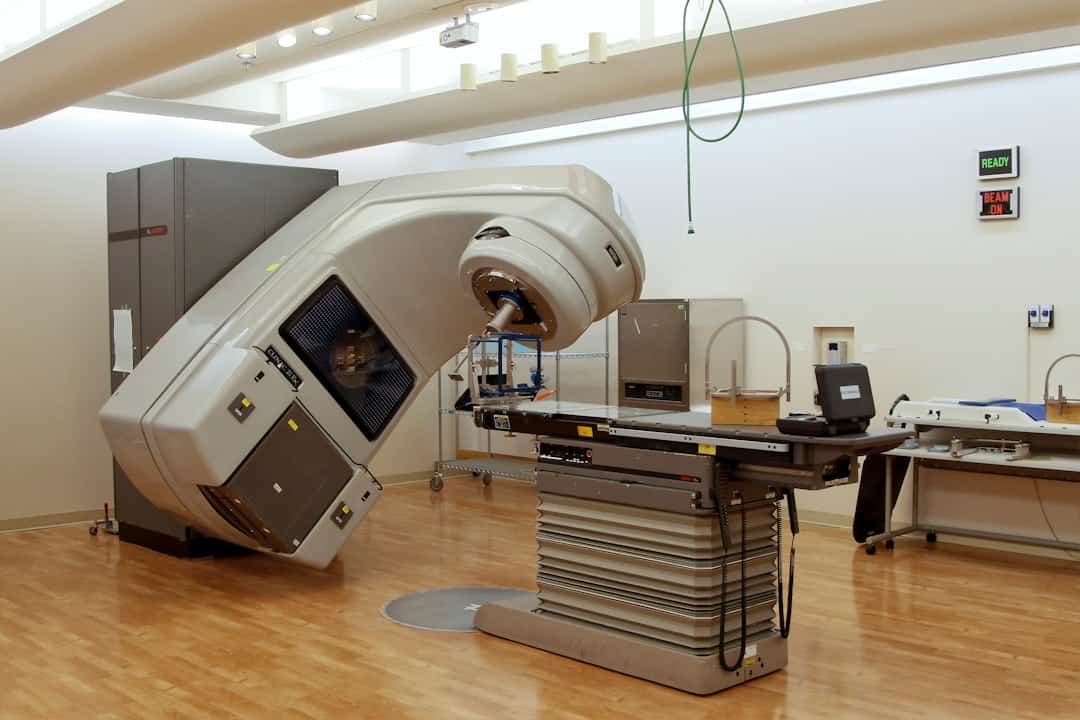
If you received radiation therapy involving the head, neck, or total body, your ocular surface health deserves ongoing monitoring — even years after treatment. Radiation-induced dry eye is a real, documented condition that often goes unrecognized in routine eye care.
How Radiation Therapy Causes Dry Eye
Radiation damages tear-producing tissue through several mechanisms that can manifest over months to years after treatment:
Lacrimal Gland Damage
The lacrimal glands are highly sensitive to radiation. Even moderate doses cause measurable reductions in tear production. Higher doses or direct exposure can cause progressive lacrimal gland atrophy with severe aqueous-deficient dry eye that is similar in severity to autoimmune Sjögren-related disease.
Meibomian Gland Damage
The Meibomian glands of the eyelids are also affected by radiation exposure. Patients commonly develop significant Meibomian Gland Dysfunction contributing to the evaporative component of post-radiation dry eye.
Conjunctival Changes
The conjunctiva can develop chronic inflammation, fibrosis, and goblet cell loss — all of which contribute to ocular surface disease.
Corneal Effects
The cornea itself may show changes including reduced sensitivity, persistent epithelial defects, and in severe cases, corneal scarring.
Total Body Irradiation
Patients who received total body irradiation (TBI) as part of stem cell or bone marrow transplant preparation have a particular risk pattern that can combine with ocular GVHD for especially severe ocular surface disease.
Common Radiation Treatments That Affect the Eyes
- Head and neck cancer radiation — direct exposure to lacrimal glands
- Nasopharyngeal cancer radiation — extensive exposure to ocular tissues
- Brain tumor radiation — depending on field and dose
- Thyroid radioactive iodine — can affect tear glands due to iodine uptake
- Total body irradiation — for stem cell or bone marrow transplant preparation
- Orbital lymphoma or tumor radiation — direct ocular exposure
- Skin cancer radiation on the face — depending on location
When Symptoms Appear
Post-radiation dry eye has a variable timeline:
- Acute (during treatment) — most patients experience immediate ocular surface inflammation that improves over weeks
- Subacute (months after treatment) — dry eye symptoms often peak in the first year post-treatment
- Chronic/late onset (years after treatment) — progressive lacrimal gland atrophy can cause worsening dry eye over many years
Patients who feel “fine” immediately after radiation should still have baseline eye care and ongoing monitoring, because late-onset symptoms are common.
Symptoms of Post-Radiation Dry Eye
- Severe dryness, often disproportionate to what other conditions might explain
- Persistent burning, stinging, or grittiness
- Reduced ability to produce emotional tears
- Photophobia (light sensitivity)
- Foreign body sensation
- Eye pain
- Stringy mucus discharge
- Visible eyelid changes (telangiectasia, skin atrophy from radiation dermatitis)
- Vision changes — usually subtle, sometimes more severe with corneal involvement
How We Diagnose Post-Radiation Dry Eye
At your comprehensive dry eye evaluation, Dr. Kresch reviews:
- Detailed radiation history — type of treatment, field, dose, timing
- Concurrent treatments — chemotherapy, immunosuppression, hormonal therapy
- Schirmer test — typically severely reduced
- Tear film breakup time and osmolarity
- Meibography — to assess Meibomian gland involvement
- Ocular surface staining — to identify severity of surface damage
- Lid margin and conjunctival assessment — for fibrosis and other radiation-specific changes
- Corneal sensation testing
- Coordination with oncology — to ensure treatment is compatible with overall cancer survivorship care
How We Treat Post-Radiation Dry Eye
Aggressive Lubrication
Preservative-free artificial tears used frequently throughout the day. For severe cases, autologous serum tears (compounded from the patient’s own blood) provide growth factors and proteins that promote ocular surface healing.
Anti-Inflammatory Therapy
Prescription anti-inflammatory drops (cyclosporine, lifitegrast) help control the chronic inflammation that often persists after radiation. Short courses of topical corticosteroids during flares are sometimes appropriate.
Punctal Plugs or Punctal CauteryPunctal occlusion conserves whatever tear production remains. For severe cases, permanent punctal cautery may be more durable than removable plugs.Scleral Lenses
Scleral lenses are often life-changing for severe post-radiation dry eye. The continuous saline reservoir behind the lens provides constant corneal hydration that no eye drop can match — particularly valuable for patients whose lacrimal glands cannot produce sufficient tears regardless of other interventions.
Treatment of Concurrent MGD
When Meibomian Gland Dysfunction is present, treatments like IPL, RF, and LLLT may be appropriate. These need careful timing and coordination with the patient’s overall cancer survivorship care.
Coordination with Oncology Team
The best outcomes come from coordinated care between the eye specialist and the oncology team. Dr. Kresch routinely communicates with referring oncologists.
Why Ongoing Monitoring Matters
Post-radiation dry eye can be progressive over years. Patients who establish baseline eye care after radiation therapy and maintain ongoing surveillance preserve their ocular surface health better than those who wait until symptoms become severe. Early intervention preserves more functional tissue than late intervention.
If you have had radiation therapy involving the head, neck, or total body — even if it was years ago and even if your eyes feel fine — establishing ongoing dry eye monitoring is worthwhile.
Radiation can leave the ocular surface dry and fragile. When eyes need a specialty lens to stay protected through the day, the scleral lens specialists at Michigan Contact Lens — our affiliated practice — fit scleral lenses for severe dry eye. Dr. Kresch cares for patients at both practices, keeping your treatment and lens fitting coordinated.
Frequently Asked Questions
My radiation was years ago and my eyes are just starting to bother me now. Is that normal?
Yes. Late-onset post-radiation dry eye is well documented. Progressive lacrimal gland atrophy can cause symptoms years after treatment. Evaluation is still very much worthwhile.
My oncologist did not warn me about dry eye. Why?
Oncology teams are appropriately focused on cancer outcomes. Eye-specific late effects often fall through the cracks of survivorship care. This is a known gap — not a reflection of your care quality.
Can my dry eye be reversed?
Damaged lacrimal gland tissue cannot regenerate. However, dry eye symptoms and ocular surface health can usually be substantially improved with appropriate treatment, even when the underlying glands cannot be restored to their pre-radiation state.
Are scleral lenses really worth it for my radiation-related dry eye?
For moderate-to-severe cases, often yes — they are one of the most impactful interventions. The continuous corneal hydration cannot be replicated by eye drops or other treatments.
Will insurance cover treatment?
The diagnostic evaluation is typically covered by medical insurance because of the underlying medical history. Scleral lenses prescribed for documented post-radiation ocular surface disease are sometimes covered by medical insurance. We help with coordination.
Will my treatment interact with anything else I am taking for cancer survivorship?
We coordinate with your oncology team to ensure compatibility. Most dry eye treatments are compatible with cancer survivorship care, but coordination matters.
I had total body irradiation for transplant. Is my situation different?
Yes — patients who had TBI often have combined radiation effects plus ocular GVHD. The treatment approach is similar but requires particular coordination with the transplant team.